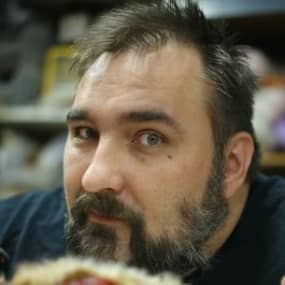
Allen Hopps on Valentine Haunts, Interactivity, and Trends
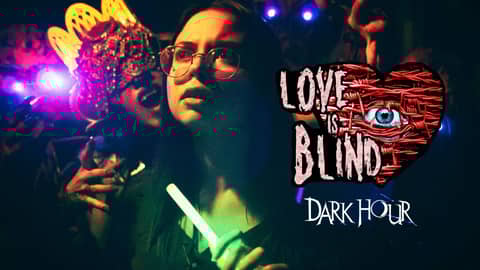
Allen Hopps explains why Dark Hour Haunted House (Plano, TX) will bring back Love Is Blind for Valentine’s weekend, reintroducing the event with a new interactive mechanic that turns a traditional blackout haunt into a choice-driven experience.


Love Is Blind Returns to Dark Hour with a New Interactive Valentine's Mechanic
Dark Hour Haunted House (Plano, TX) will bring back Love Is Blind for Valentine's weekend, reintroducing the event with a new interactive mechanic that turns a traditional blackout haunt into a choice-driven experience.
The limited-run event will take place Friday, February 13, and Saturday, February 14, at Dark Hour Haunted House in Plano, Texas. Unlike earlier iterations of Love Is Blind, this version incorporates gameplay elements from Dark Hour's Dead by Dark Hour format, asking guests to actively manage how they move through the attraction rather than simply endure the darkness.
Rethinking the Blackout Format
Dark Hour first ran Love Is Blind years ago as a standard lights-out experience using glow sticks. According to owner and creative director Allen Hopps, the response was mixed.
"Love Is Blind was way before we did a gamified Dead by Dark Hour," Hopps said. "It was just a lights-out haunted house with a glow stick. It was mildly successful, but we actually got more complaints because we're known for our set work and set design and costumes. For any show that's known for that, a blackout show is anti-climactic or unrewarding."
Rather than abandon the concept, Dark Hour evolved it. After testing interactive mechanics in other off-season events, Hopps revisited Love Is Blind with a different question: What if darkness was not just a limitation, but a tool players could manipulate?
Hide the Light or Be Hunted
The core mechanic of Love Is Blind 2026 centers on a glow stick that both helps and hurts.
Guests need the light to see where they are going, but monsters are drawn to it. If the light is visible, actors respond. If guests hide the light by covering the glow stick, monsters pass them by.
"They get the glow stick, and as they're going through, the monsters are drawn to the glow stick," Hopps explained. "If they make an effort to hide the glow stick and not let the light come out, the monsters will pass them by because they didn't see them. So what that means, if there's a monster in hiding, they're gonna start making noise as they come to you, and then you can hide that light, but then they might see someone else and go after them."
The dynamic is intentional, especially for couples.
"I think we'll get some of those situations where, in order to distract the monster from your partner, you will let your light shine a little bit," Hopps said. "Then the monster gets drawn off of them to you. That's the dynamic I really want the actors to play with."
The result is interaction not just between the actor and the guest, but also between the guests themselves.
"It's a chance to play," Hopps said. "I think that there's a need to have the audience interact with the world in more than just a 'I get scared or I don't.'"
Do Guests Want an Interactive Haunted House
Although this version of Love Is Blind is new, Allen has been testing these mechanics for a while, and the guests seem to have resonated with them. Repeat guests often arrive already prepared.
"At our holiday show, I was out by the queue talking with somebody, and there were five or six young ladies from two different groups," Hopps recalled. "They all pulled a hair tie off their wrist and put their hair in a ponytail. I said, 'Are you ready for adventure?' They said, 'Now the stickers won't get caught in our hair.'"
"They had been here before and they knew the mechanic and they were kind of prepared," Hopps said. "As far as that's an interactive audience who has made decisions ahead of time based off of the dynamics of your event. So that means you are in their head and you're affecting their everyday life. That's awesome."
"I think one of the hardest things we have to do is kind of make people give a damn about what we're doing and make them care about why we're doing this," he added.
Keep it Simple
Of course, too much of anything would be bad, and Allen found out over the iterations that too many rules or too many mechanics make it hard to play. "They can only remember two rules at a time," he said. "You have to make whatever those things are look very different."
To support that, Dark Hour introduces mechanics through video in the lobby and again in the first room. The attraction can handle approximately 2,200 people per evening before the interactive elements start to break down. "More than that, and I would need to be open a little longer," Hopps said.
Designing for the Full Night
For Hopps, the haunted house itself is only part of the experience. The moments before and after matter just as much, especially for Valentine's couples.
"I think the worst date you could go on is going to the movies," he said. "You sit there in the dark and don't talk to each other for two hours, and then the date's over and you go home. You learned nothing about that person."
At Dark Hour, the goal is to build anticipation, deliver intensity, and then give people space to decompress together. "I want people to be in line between 15 and 30 minutes," Hopps said. "I think that actually helps the haunted house experience because you do have that anticipation. You're watching groups go in, and you're watching how they act as they go in. And then you have a chance to talk about that upcoming experience."
This operational philosophy aligns with recent research; A 2024 study from the University of Florida titled "Haunted Attraction: The Effects of Recreational Fear on Interpersonal Bonding" found that sharing a frightening experience made participants feel closer to others in their group. The key finding: bonding happened after the haunt, through talking, laughing, and reflecting together, rather than during the experience itself.
The research validates Hopps's approach. By designing for 15-30 minutes of anticipation in line and providing post-haunt decompression space, Dark Hour creates the conditions for what the study identifies as the most valuable part of the shared fear experience.
Future Mechanics and Valentine's Timing
Dark Hour continues to evolve its interactive systems. Hopps is working on a new mechanic borrowed from the Dead by Daylight video game, where characters can be temporarily removed from the group and must be rescued by teammates.
"In the Dead by Daylight video game, they have where a character can get taken out of your group and they get hooked," Hopps explained. "That's a mechanic that we're working on. It's actually a lanyard. You can stand them on a one-foot box and then you put a lanyard on their neck and it looks like the hook is coming out of their chest because you put that lanyard on them. And if their friends want to get them down, they have to take the lanyard off and hang it on the hook beside it so that the killer can go get the next person."
The mechanic requires operational coordination. The "hooked" guest must be moved forward through the attraction so their group can find and rescue them.
Event Details
- · What: Love is Blind
- · Where: Dark Hour Haunted House, Plano, Texas
- · When: February 13 and 14, 2026
- · Website: darkhourhaunts.com
Part of a Broader Valentine's Haunt Movement
Dark Hour's Love is Blind is one of several haunted attractions expanding into Valentine's weekend 2026, taking advantage of Friday the 13th falling on Valentine's Day weekend.
Horrorland Miami announced Love Kills, a four-night Valentine's event at Jungle Island running February 12-15. The attraction is positioning the event as a fully produced haunted experience comparable to their Halloween operations, with tickets starting at $29.99.
Queen Mary's Dark Masquerade takes a different approach, emphasizing intimate character encounters and theater-style immersion with curated tastings and guided exploration aboard the ship. The event runs February 13-14 in Long Beach, California.
Cinema of Horrors in Kelso, Washington is running Hearts of Horror, a simpler model that turns off the lights in their four theater-based haunts and provides candles for navigation.
Fright Nights WV introduced Final Cut: 'Til Death, which combines interactive "kill sticker" survival mechanics with an integrated bar crawl experience, using layered interactivity to justify premium pricing from $30 general admission to $60 for bar crawl packages.
Dark Hour's hide-the-light mechanic positions it alongside Fright Nights WV as one of the more interactive Valentine's haunt formats emerging this season, rather than simple blackout or theatrical immersion approaches.
With Love Is Blind, Dark Hour is using Valentine's weekend not as a novelty, but as a laboratory. It is a chance to test how choice, interaction, and shared fear can turn a date night into something more participatory than darkness alone ever could.
WEBVTT
1
00:00:08.519 --> 00:00:11.480